
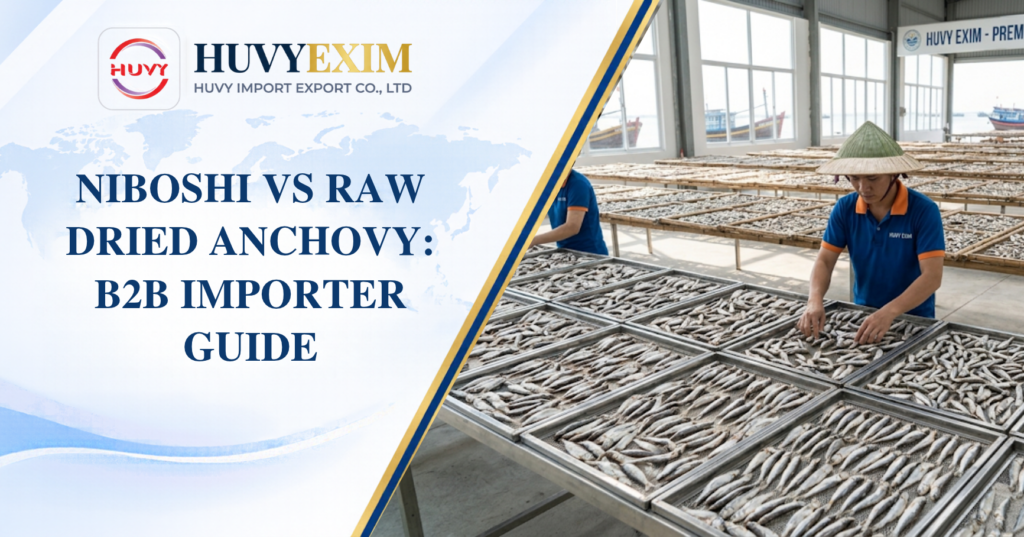
Niboshi is the Japanese term for boiled dried anchovy, one of the two main processing styles traded internationally alongside raw dried anchovy. The two styles differ in processing, flavour intensity and market fit. This guide explains the key differences so B2B importers, wholesalers and food manufacturers can select the most suitable type for their target market and product formulation.
This guide is a market overview for buyers comparing processing styles globally. HUVY EXIM’s standard export line is brine-boiled, which matches the niboshi profile described here; raw dried anchovy is covered for comparison.
What Is Niboshi?
Niboshi (煮干し) is the Japanese term for small fish that have been boiled in salted water and then dried. In the dried anchovy trade, niboshi refers specifically to boiled dried anchovy, distinguished from raw dried anchovy, which is salted and dried directly without a boiling step.
The term is most widely used in Japan and South Korea, where niboshi is a foundational ingredient for dashi stock. In other markets, the same product is traded as boiled dried anchovy. Both names refer to the same processing method: brine boiling followed by controlled drying.
For the full range of product forms by size and colour, see ourdried anchovy fish category.
How Niboshi (Boiled Dried Anchovy) Is Made
Niboshi production follows a defined sequence that distinguishes it from raw dried anchovy.
Processing Steps
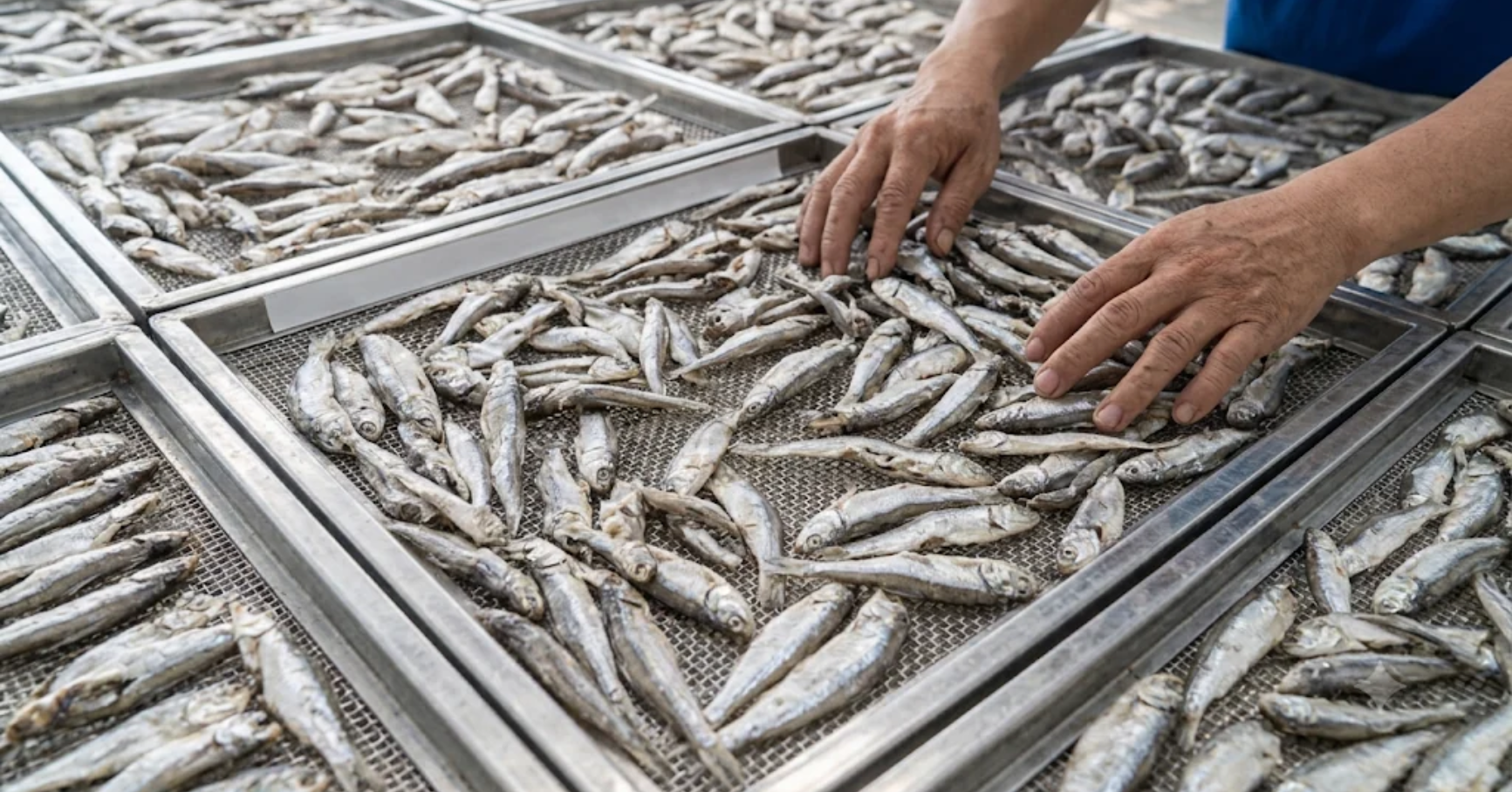
Fresh anchovies are cleaned and briefly boiled in salted water. After boiling, the fish are drained and dried under controlled conditions, either sun-drying or mechanical dehydration. The boiling step firms the texture, reduces certain enzymes and develops a deeper umami character. This sequence is described in detail in our boiled dried anchovy processing guide.
Flavour Profile and Typical Uses
Niboshi delivers a clean, intense umami flavour highly valued in soup bases (especially dashi), seasonings and premium snack production. It is frequently requested when manufacturers need consistent flavour strength and a slightly firmer texture. The product is popular in markets that prioritise extractable taste, particularly Japan, Korea and premium segments in Southeast Asia.
Raw Dried Anchovy: Traditional Sun-Dried Style
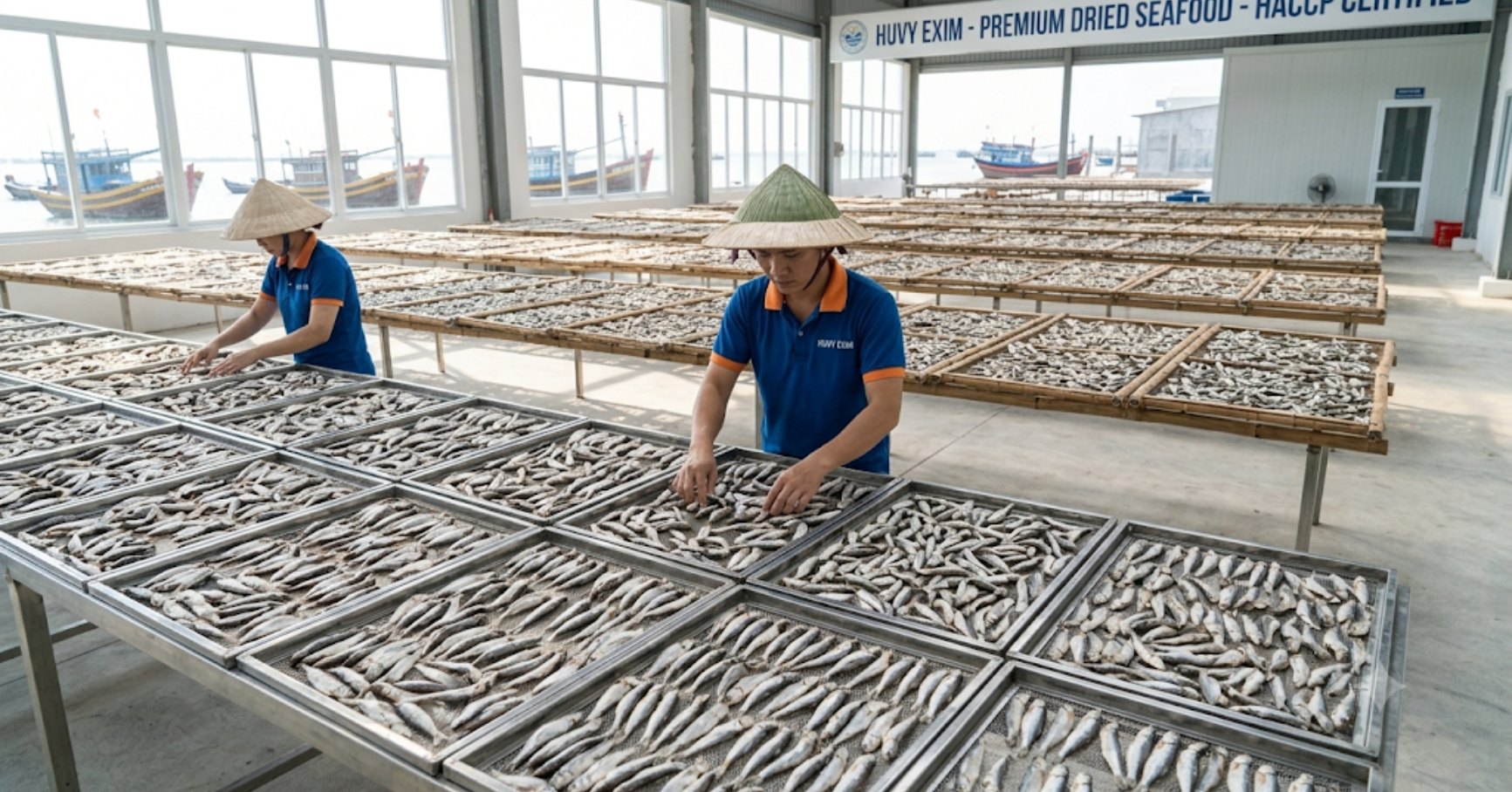
Raw dried anchovy is salted and dried directly without boiling, preserving a milder and more natural seafood taste.
Processing Method
Raw dried anchovy is produced by salting and then drying the fish directly, without a boiling stage. Traditional sun-drying or modern hot-air drying brings the moisture content down to the export standard of 30% maximum. This method preserves a more natural seafood flavour and a slightly more delicate texture.
Characteristics and Applications
Raw dried anchovy typically has a milder, fresher taste compared with niboshi. It is widely used in traditional Southeast Asian cooking, further processing into seasonings, and as a versatile ingredient where a less intense flavour is preferred. Many buyers in Thailand, Malaysia and Singapore continue to request this style for everyday culinary applications.
Niboshi vs Raw Dried Anchovy: Key Differences
The table below summarises the main differences in processing, flavour, texture and typical market use.
| Parameter | Niboshi (Boiled Dried Anchovy) | Raw Dried Anchovy |
| Processing | Boiled then dried | Directly dried (no boiling) |
| Flavour intensity | Stronger, clean umami | Milder, more natural |
| Texture | Firmer | Slightly more delicate |
| Colour | Often slightly darker or uniform | Natural white to yellow or grey |
| Common applications | Dashi, premium snacks, extracts | Traditional cooking, general seasoning |
| Typical markets | Japan, Korea, premium segments | Southeast Asia (Thailand, Malaysia, Singapore) |
Both styles can be supplied as whole, headless or fillet forms. Size bands vary by form: whole 1–2, 2–3, 4–6 and 5–7 cm; headless 4–6 and 5–7 cm; fillet 3–4 and 3–5 cm. For full technical parameters, see our moisture, salt and size specifications.
Market Preferences by Region
Demand for niboshi and raw dried anchovy varies by region, with clear preferences in Japan, Korea and Southeast Asia.
| Market | Niboshi (Boiled) | Raw | Notes |
| Japan | Strong preference | Limited | Dashi, premium applications |
| South Korea | Strong preference | Limited | Soup stock, seasoning |
| Thailand | Growing in snacks | Mainstream | Traditional cooking |
| Malaysia | Growing in snacks | Mainstream | Ikan bilis snacks and cooking |
| Singapore | Growing in snacks | Mainstream | Retail and food service |
| Industrial buyers | Case by case | Case by case | Depends on end product |
Key observations:
- Japan and Korea: Strong preference for niboshi due to its suitability for soup stock and high-end applications.
- Thailand, Malaysia, Singapore: Raw dried anchovy remains the mainstream choice for traditional dishes and everyday use, although boiled styles are growing in the snack and seasoning sectors.
- Wholesale buyers: When sourcing boiled dried anchovy wholesale, clear specification of boiling method, salt level and size is essential to match the intended application.
Price levels for niboshi are generally higher than raw dried anchovy because of the additional processing step and the flavour concentration it provides.
For colour-grade selection within each processing style, see our white vs black anchovy comparison. For form selection (whole, headless or fillet), see our head-on vs headless vs fillet guide.
Quality Parameters for Niboshi and Raw Dried Anchovy
Regardless of processing method, professional exporters maintain the same core standards: moisture content at 30% maximum, salt content between 5–8%, accurate size grading and strict hygiene. These parameters are verified under HACCP and ISO 22000 systems, and every batch follows the same documented processing sequence.
For niboshi, additional attention is given to the boiling stage (time, temperature and salt concentration) to ensure consistent flavour. Laboratory testing of moisture and salt remains standard for every batch.
How B2B Buyers Should Choose Between Niboshi and Raw Dried Anchovy
When deciding between niboshi and raw dried anchovy, buyers should first define the end use:
- Choose niboshi for dashi, intense seasoning extracts or premium snacks
- Choose raw dried anchovy for traditional cooking, general food manufacturing or cost-sensitive applications
In the RFQ, clearly state the required processing method, size grade, colour preference and packaging. This reduces discrepancies and speeds up contract confirmation. For buyers new to the trade, confirming whether the supplier’s standard line is boiled or raw should be the first question.
Conclusion
Niboshi (boiled dried anchovy) offers stronger umami for soup bases and premium products, while raw dried anchovy provides a natural flavour suited to traditional applications. Matching the processing method to your market improves product performance.
For current availability, detailed specifications or a proforma invoice, contact our trade desk today. We support fully documented B2B shipments with consistent quality.

Mr. Le Nguyen Quoc Hung
I am Le Nguyen Quoc Hung, the legal representative of HUVY IMPORT EXPORT COMPANY LIMITED (HUVYEXIM), a Vietnam-based import-export company. I am committed to developing reliable business relationships with international buyers, delivering export solutions tailored to our partners’ needs, and building long-term partnerships in global markets. Through HUVYEXIM, I aim to connect Vietnamese products with international markets while maintaining a strong focus on professionalism, product quality, and customer satisfaction.