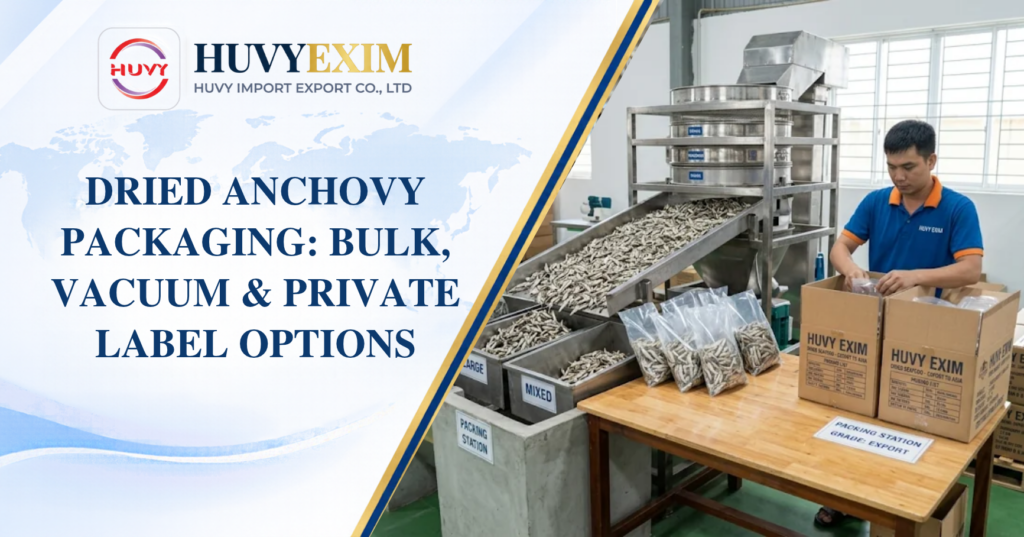
Choosing the right dried anchovy packaging helps importers, distributors and food manufacturers protect product quality, optimize logistics and meet destination-market requirements. Packaging choices affect storage efficiency, product preservation, shipping costs and retail presentation. This article covers the common options used by professional Vietnamese exporters, from bulk cartons and vacuum-sealed bags to private label and OEM solutions, so international buyers can evaluate suitable formats for their product specifications, order volume and business needs.
Why Packaging Matters
Dried anchovies can absorb moisture, undergo oxidation or sustain physical damage when packaging and storage conditions are unsuitable. Appropriate packaging helps maintain product quality throughout storage, handling and international transportation.
For wholesale buyers, packaging also influences inventory management, shipment planning, traceability and retail presentation. The right format depends on product specifications, order volume, storage conditions and the intended sales channel. For the technical baseline that packaging must protect, see our dried anchovy specifications.
Dried Anchovy Packaging Options
Different packaging formats serve different commercial purposes, from bulk supply for food processing to consumer-ready products for retail distribution. The three main categories used in export trade are bulk cartons, vacuum-sealed packs and retail pouches.
Bulk Dried Anchovy 10 kg Packaging
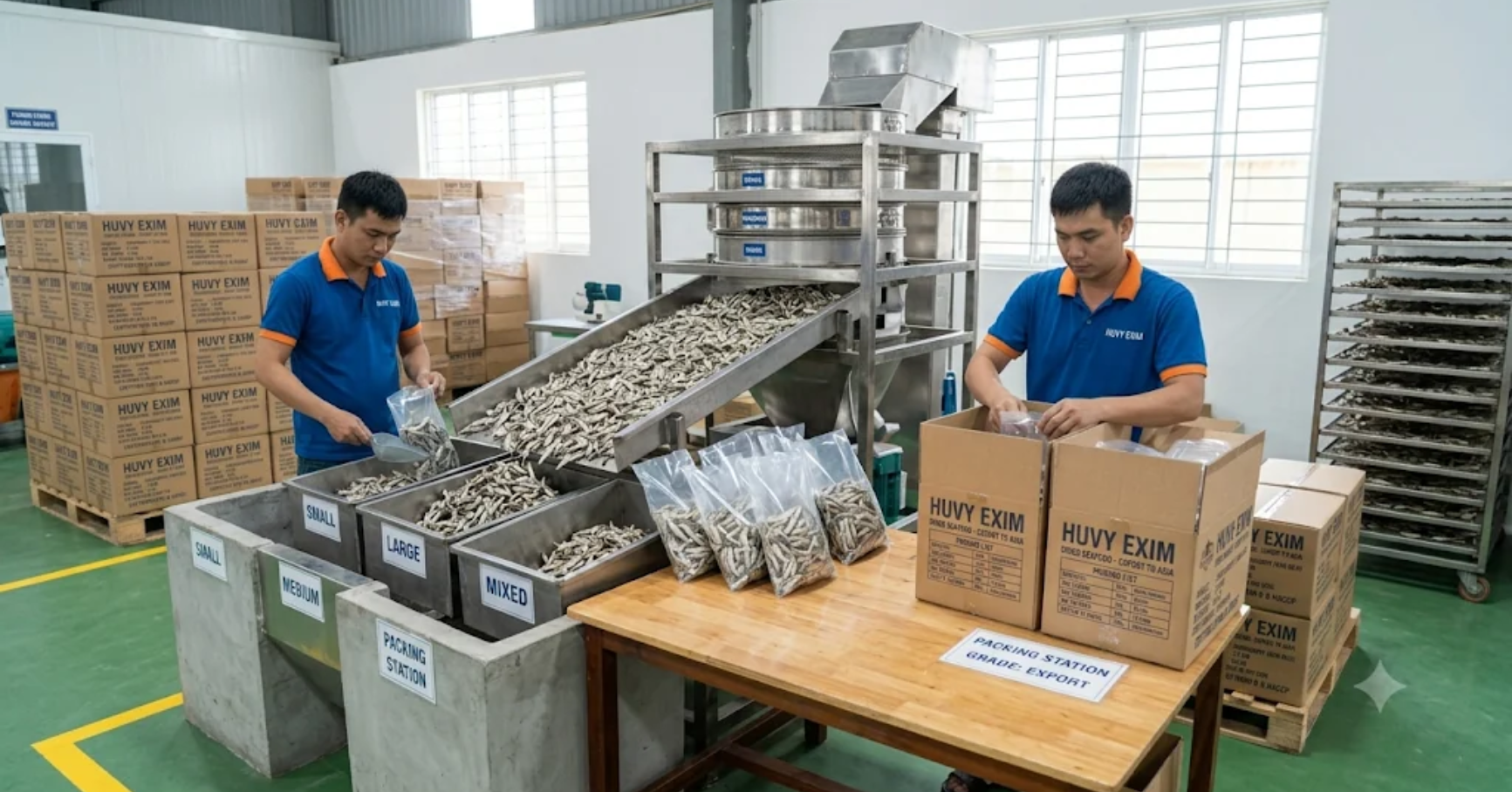
Bulk dried anchovy 10 kg packs are the standard format for wholesalers, food processors and distributors that require large quantities for processing or repacking. The standard export carton is 10–13 kg, lined with a moisture-barrier PE bag to protect against humidity during sea transit. Heavier cartons are available on request for buyers who prefer larger handling units per pallet.
Buyers should confirm pack weight, packaging materials and carton specifications based on their storage and shipping needs. For most Asian destinations, 10–13 kg cartons balance protection, palletization efficiency and manual handling.
Vacuum Packed Dried Anchovy
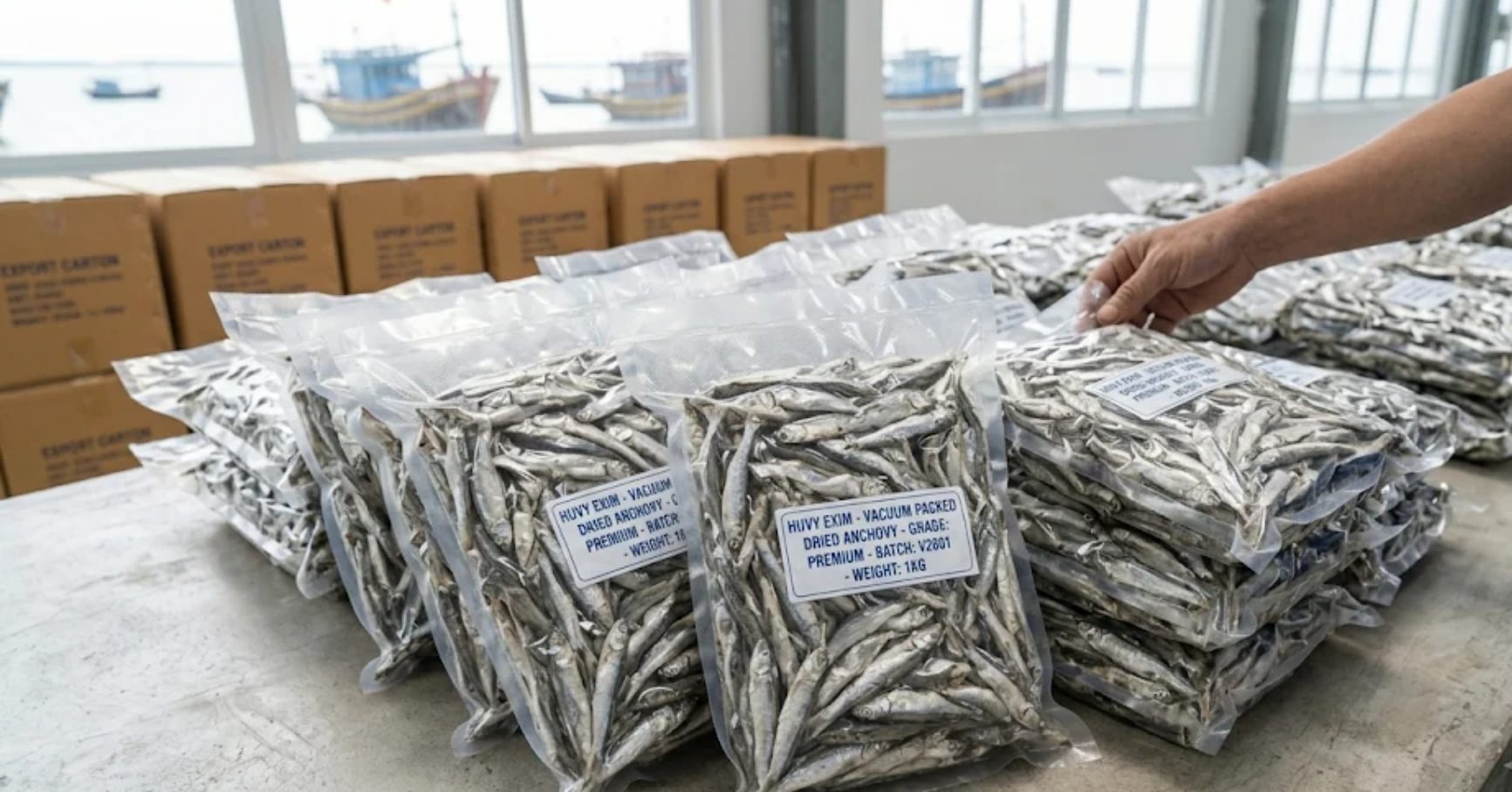
Vacuum packed dried anchovy is sealed after air removal to reduce oxidation when suitable barrier materials are used. Vacuum packaging is common for premium retail lines, gift packs and smaller consumer formats, where the compact brick-style pack improves shelf presentation and extends shelf life under proper storage.
Buyers should verify seal integrity, moisture specifications, storage conditions and validated shelf life, because vacuum packaging alone does not guarantee product preservation. Moisture content at 30% max and salt content within 5–8% remain the primary preservation controls; vacuum is a supporting measure.
Retail Packaging
Retail packaging, including sealed pouches and smaller consumer packs, suits supermarkets, specialty food stores and online sales. Common retail formats range from 50 g to 500 g pouches, with printed artwork, nutrition panels and origin labeling adapted to the destination market.
Buyers should consider pack size, product presentation and destination-market labeling requirements before approving the final artwork. Labeling review is often the longest step in retail packaging development, so early alignment prevents costly reprints.
HUVY EXIM Packaging Capabilities
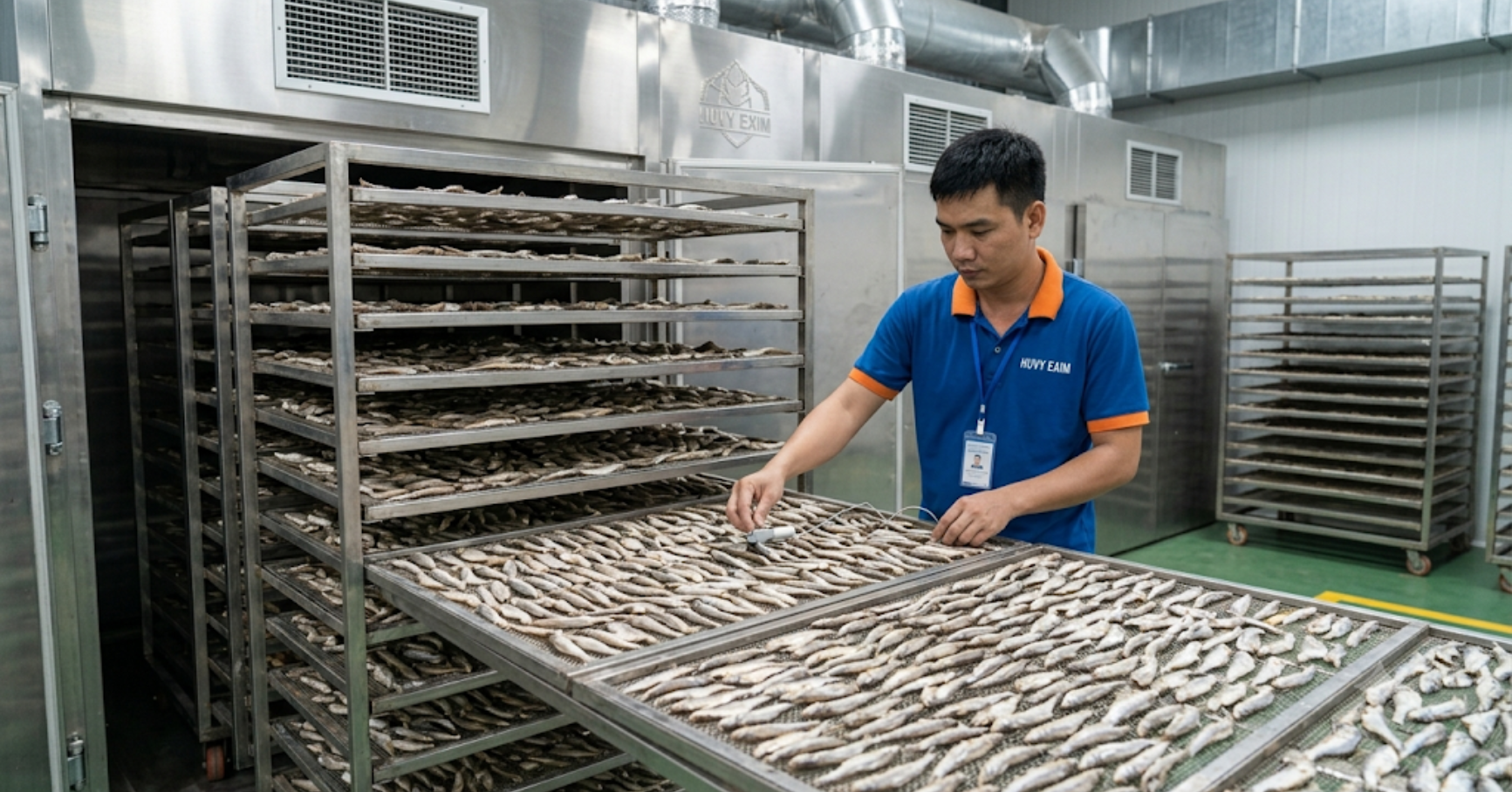
HUVY EXIM supplies dried anchovy packaging across three standard formats, all produced under HACCP and ISO 22000 systems:
- Bulk cartons: 10–13 kg corrugated cartons with food-grade PE liners, suitable for industrial and repacking buyers
- Vacuum-sealed packs: Available for premium lines and retail-ready formats, with seal integrity verified batch by batch
- Private label and OEM: Custom artwork, pack size, net weight and label content produced to buyer specification
Standard MOQ is 6 MT. Lead time is 10 days after contract confirmation for standard formats, with 5–10 days for stock and repeat orders. Monthly capacity supports 6–19 MT depending on grade and season. Every carton is traceable back to the production batch and fishing area, following our five-step processing sequence.
How to Choose the Right Packaging
The best packaging option balances product protection, shipping efficiency and the requirements of the intended market.
| PACKAGING TYPE | TYPICAL APPLICATION | KEY CONSIDERATIONS |
| Bulk bags or cartons (10–13 kg) | Wholesale and food processing | Pack weight, materials, carton strength, PE liner |
| Vacuum-sealed bags | Reduced air exposure, premium retail | Seal integrity, barrier properties, shelf life |
| Retail pouches | Consumer sales | Pack size, artwork, labeling requirements |
Product Protection
Packaging materials should match the anchovy size, moisture content and processing method. Buyers should consider moisture-barrier properties, seal quality and resistance to punctures or handling damage.
Shelf life should be established through appropriate specifications and validation, not assumed from the packaging format alone. A 30% max moisture specification, combined with a moisture-barrier liner and cool, dry storage, is the foundation of shelf stability.
Shipping and Storage
Packaging dimensions and weight affect warehouse space, palletization and container utilization. Standardized pack sizes simplify inventory management and shipment planning.
For international orders, buyers should confirm carton dimensions, net and gross weights, units per carton and pallet requirements where applicable. This information supports accurate freight planning and helps avoid discrepancies during shipment preparation.
Market Requirements
Packaging and labeling requirements vary by destination country. Importers should verify applicable rules for food-contact materials, label language, origin declarations, traceability and supporting documentation before production. The table below summarizes the main labeling considerations for our core markets.
| MARKET | KEY LABELING CONSIDERATIONS |
| Thailand | Thai language label, Thai FDA import requirements for some categories |
| Malaysia | Bahasa Malaysia label, Halal logo where applicable, JAKIM requirements |
| Singapore | English label, SFA import requirements |
| South Korea | Korean language label, MFDS import declaration |
| EU (optional) | Language of destination country, allergen declaration |
Confirming these requirements early reduces the risk of relabeling, shipment delays or compliance issues after arrival. For color-grade selection within each form (white, grey, yellow), see our white vs black anchovy comparison.
Private Label and OEM Options
Customized packaging helps buyers develop branded products and meet target-market requirements. Two distinct models are common in dried anchovy trade.
Private Label Dried Anchovy
Private label dried anchovy allows importers and distributors to sell products under their own brand. Customization typically includes logo placement, packaging artwork, pack size and product information. For retail channels, private labels usually involve a defined pack size, printed pouch and barcode.
Buyers should confirm labeling requirements for their target market and approve final artwork before production, to ensure consistent brand presentation and to avoid reprints.
OEM Dried Anchovy Wholesale
OEM dried anchovy wholesale arrangements allow buyers to specify product and packaging requirements together, including anchovy grade, size range, processing method, packaging materials, net weight and label details. OEM is often used by food manufacturers who need a specific specification that feeds directly into their production line.
Before placing an order, buyers should confirm MOQ, customization costs, packaging availability and production lead time. Custom size bands such as 3–5 cm fillet or specific whole fish grades can be arranged once technical requirements and order volume are confirmed.
What Buyers Should Confirm Before Ordering
Before requesting a quotation, international buyers should prepare the following information:
- Product specifications: Grade, size range, processing method and moisture requirements
- Packaging details: Format, material, net weight and carton dimensions
- Market requirements: Labeling information and relevant packaging documentation
- Order terms: MOQ, customization costs, production lead time and shipping terms
Providing these details helps suppliers assess feasibility and prepare accurate quotations.
Conclusion
Choosing the right dried anchovy packaging protects product quality, optimizes shipping and meets market requirements. From 10–13 kg bulk cartons to vacuum-sealed premium packs and private label solutions, buyers should confirm packaging specifications, order quantities and destination-market requirements before production. HUVY EXIM supports B2B buyers in discussing suitable sourcing and packaging options for their export needs, with full documentation under HACCP and ISO 22000.
For packaging specifications, current availability or a proforma invoice tailored to your discharge port, contact our trade desk. We are ready to support documented, compliant shipments to your market.
Mr. Le Nguyen Quoc Hung
I am Le Nguyen Quoc Hung, the legal representative of HUVY IMPORT EXPORT COMPANY LIMITED (HUVYEXIM), a Vietnam-based import-export company. I am committed to developing reliable business relationships with international buyers, delivering export solutions tailored to our partners’ needs, and building long-term partnerships in global markets. Through HUVYEXIM, I aim to connect Vietnamese products with international markets while maintaining a strong focus on professionalism, product quality, and customer satisfaction.