Korean and Japanese cuisine rely heavily on dried anchovies as the foundation for clear broths, dashi stocks, banchan side dishes, and furikake seasonings. For professional food importers, successful dried anchovy to Korea import operations depend on strict compliance with color standards, histamine limits, size uniformity, and moisture control. This guide outlines the exact technical requirements of the Korean and Japanese markets and explains how a direct Vietnamese manufacturer meets them.
Introduction to the Northeast Asian Seafood Demand
In both Korea and Japan, dried anchovies are not a commodity product – they are a culinary essential. Korean households and restaurants use Myulchi for soup stocks and stir-fried banchan, while Japanese manufacturers depend on niboshi and chirimen for dashi and rice toppings. Importers targeting these markets must therefore source products that satisfy highly specific sensory and safety benchmarks. Choosing a reliable origin and a transparent manufacturer is the first step toward consistent clearance and customer acceptance.
Strict Quality Benchmarks for the Dried Anchovy Japan Market & Korea
Korean and Japanese buyers apply some of the strictest sensory and safety standards in the dried seafood trade. Meeting these benchmarks begins with natural color preservation and tight control of histamine levels.
Natural Color Without Chemical Bleaching
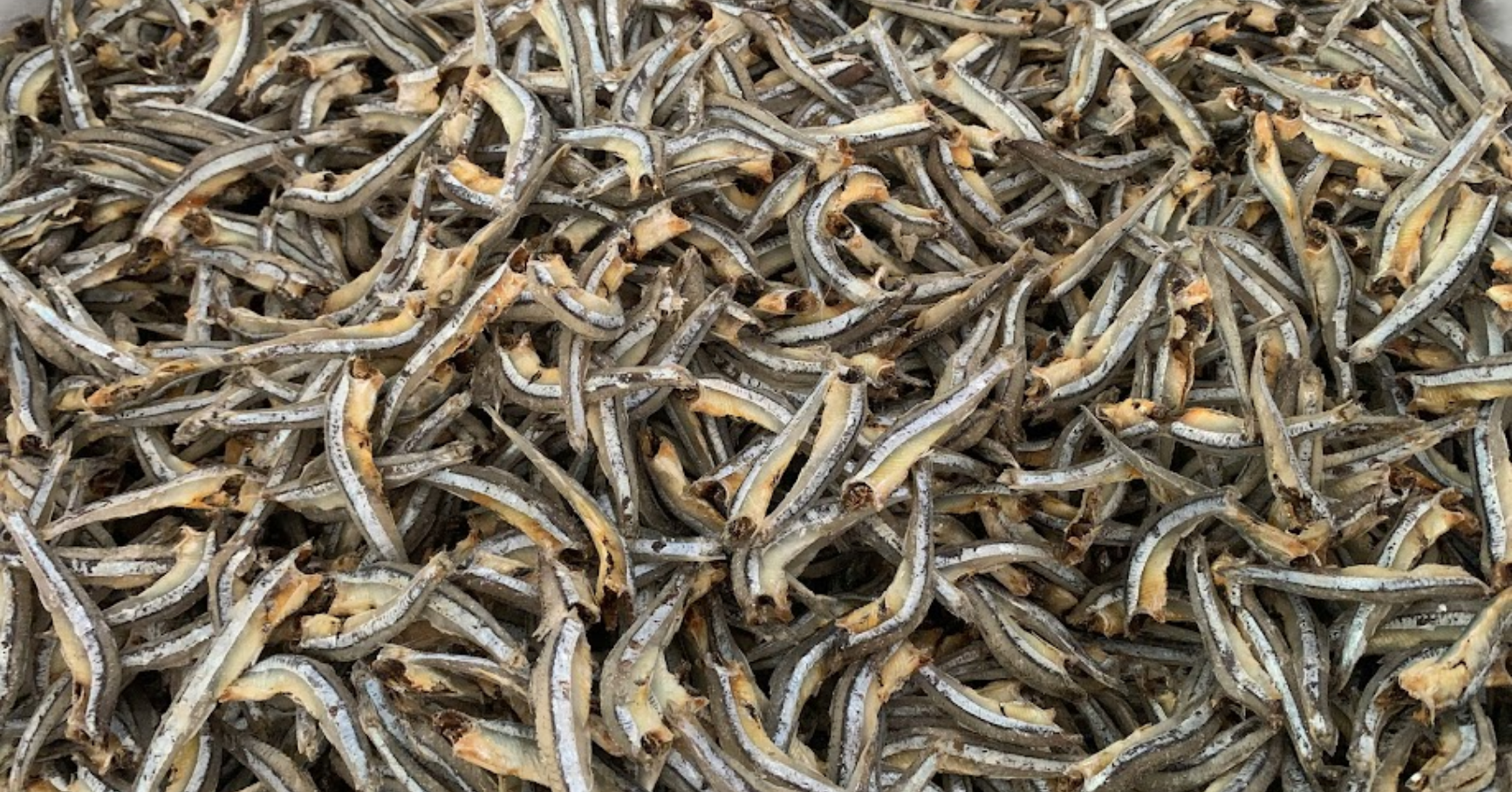
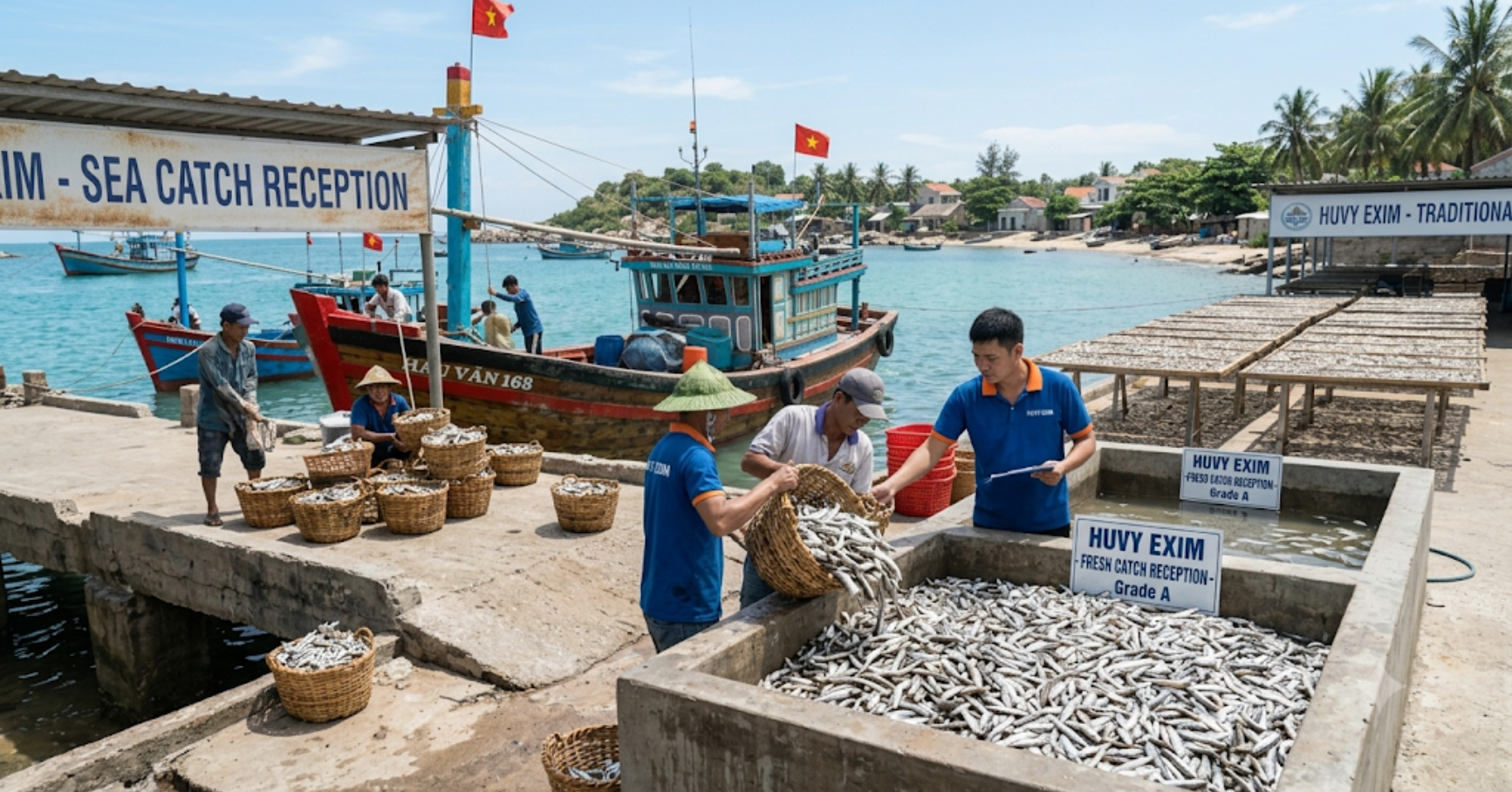
Korean and Japanese buyers demand natural color. Any artificial whitening is immediately rejected. HUVY EXIM sources fresh anchovies from the productive coastal waters of Kien Giang, Ba Ria–Vung Tau, and Binh Thuan. The fish are boiled in light brine within hours of landing. This rapid light-brine process preserves the natural silvery-white or golden appearance and eliminates any need for chemical bleaching agents such as peroxide.
Controlling Histamine Levels for Customs Clearance
Elevated histamine is one of the most common reasons for rejection at Korean Customs Service (KCS) and Japan’s Ministry of Health, Labour and Welfare (MHLW). Histamine formation accelerates when fish remain at ambient temperature after catch. By purchasing directly from purse-seine and lift-net vessels and beginning processing within a few hours, HUVY EXIM keeps histamine levels well within the strict limits required for both markets.
Matching Vietnam Export Specs to Korean “Myulchi” & Japanese “Niboshi”
Successful supply requires precise matching of size, moisture, and salinity to local product names and end-use applications – from traditional soup stock to ready-to-eat snacks.
Sourcing from a Premium Dried Anchovy Soup Stock Supplier
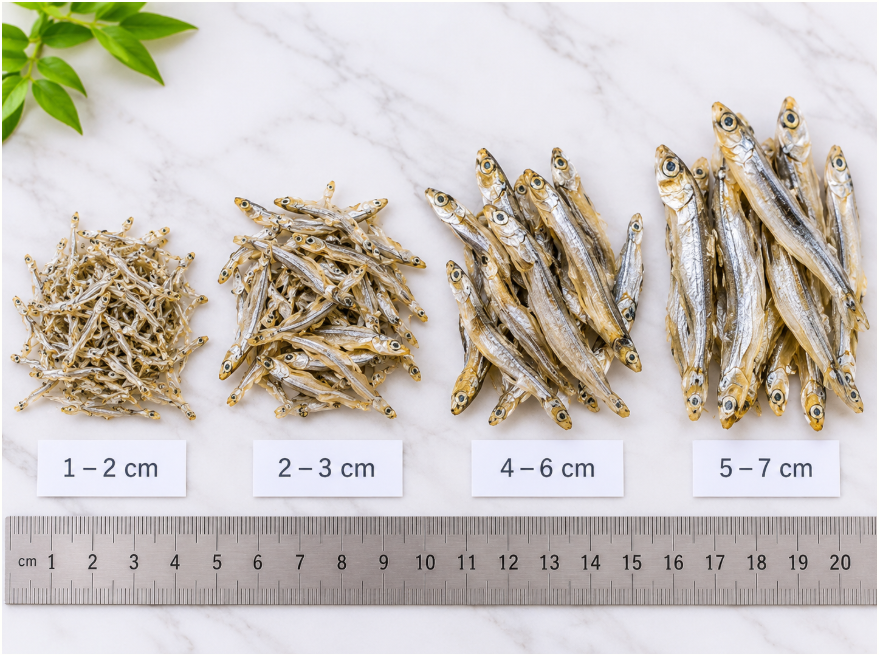
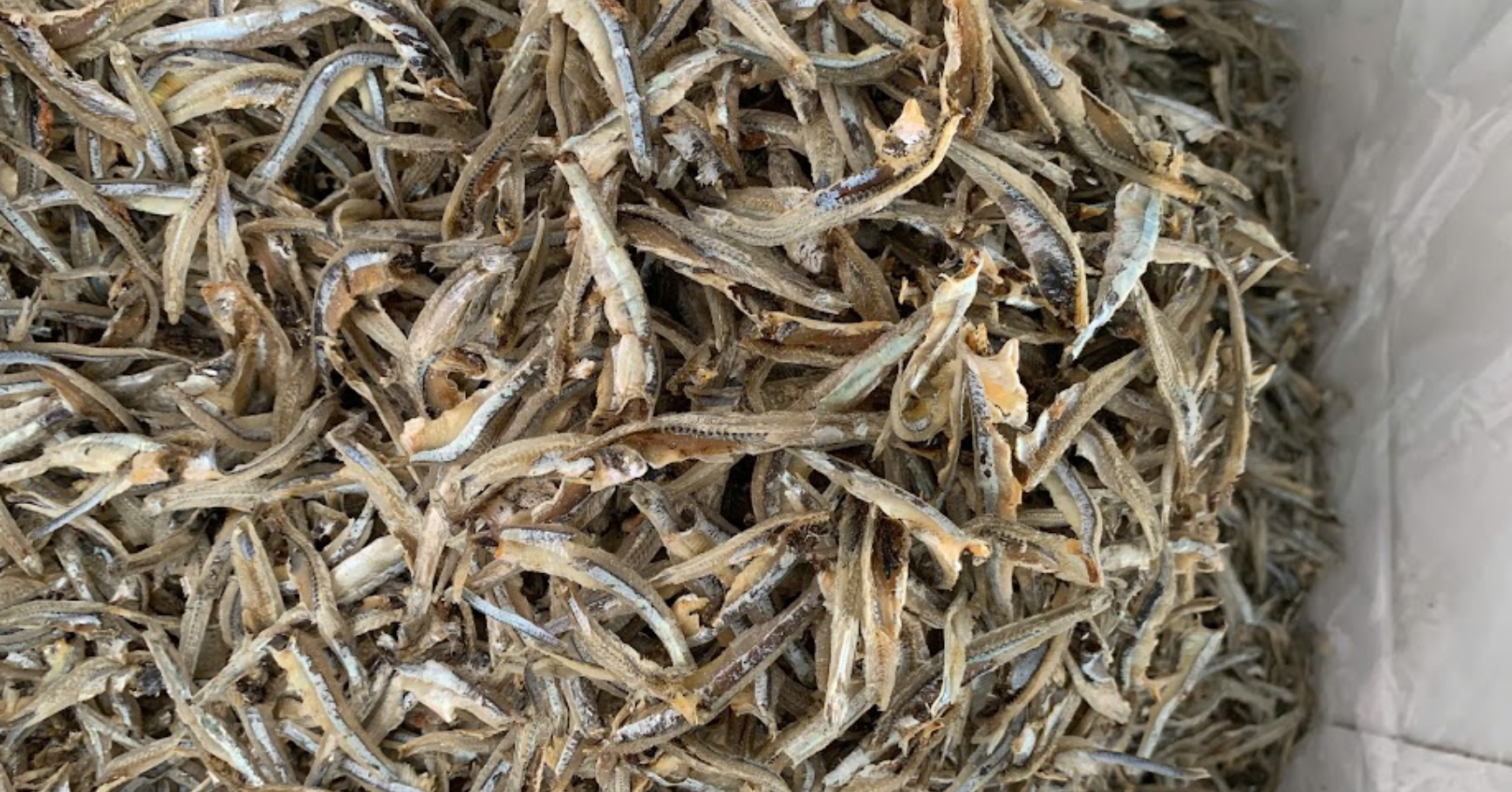
For traditional soup stock and dashi applications, whole dried anchovies in the 4–6 cm and 5–7 cm size ranges are preferred. These grades are finished at a maximum moisture content of 30% with standard salinity of 5–8%. The resulting product delivers clean marine flavor and good extraction yield for industrial and food-service broth production.
Low-Salt Snack Grades: Headless & Fillet Cuts
For stir-fried banchan, glazed snacks, and ready-to-eat applications, headless (4–6 cm / 5–7 cm) and butterflied fillet cuts (3–4 cm / 3–5 cm) are required. These grades undergo deeper dehydration to a moisture range of 20–26%. The lower moisture ensures crisp texture after roasting or seasoning and reduces the risk of clumping on automated production lines.
The Chirimen Line (Baby Anchovies < 2 cm)
Japanese importers actively seek small, low-salt baby anchovies (chirimen) under 2 cm. Finished with salinity controlled between 3–5%, this grade offers a soft texture, high calcium content, and clean appearance ideal for furikake, children’s nutrition products, and elderly-friendly foods.
Standardizing Export Packaging & Cold Chain Logistics
Even high-quality products can deteriorate during ocean transit if packaging and temperature control are inadequate. Proper grading, protective cartons, and appropriate container selection are essential.
Eliminating Mold & Broken Pieces During Ocean Transit
Before packing, every lot passes through vibratory grading screens that remove broken pieces, scales, and foreign matter. Standard export packaging consists of 5-ply corrugated cartons (10–13 kg net) fitted with heat-sealed food-grade PE liners. Vacuum packing is available for supermarket-ready orders.
Reefer Container Recommendations
For low-salt grades destined for Korea and Japan, HUVY EXIM recommends chilled reefer containers set between 0°C and 5°C. Maintaining this temperature range during ocean transit prevents lipid oxidation, color change, and moisture migration, ensuring the product arrives in the same condition as when it left the factory.
HUVYEXIM: Your Direct Myulchi Supplier Vietnam & Niboshi Manufacturer
As a direct manufacturer rather than a trader, HUVY EXIM combines coastal sourcing, factory processing, and full export documentation under one controlled supply chain – making it a reliable partner for dried anchovy Korea import programs.
| Item |
Specification
|
|
Minimum Order Quantity
|
6 MT |
|
Monthly Supply Capacity
|
6–19 MT (scalable to 25+ MT in peak season)
|
|
Food Safety Certifications
|
HACCP, ISO 22000
|
|
Health Documentation
|
Health Certificate
|
|
Preferential Origin
|
Form AK (Korea), Form VJ / AJ (Japan)
|
By issuing the appropriate Certificate of Origin under the relevant Free Trade Agreements, HUVY EXIM enables Korean and Japanese importers to benefit from reduced or zero import duties.
Conclusion
Successful dried anchovy Korea import and supply into the dried anchovy Japan market require more than competitive pricing. They require precise moisture and salinity control, natural color preservation, low histamine levels, and complete export documentation. As a direct Vietnamese manufacturer, HUVY EXIM provides all of these elements under one roof.
Contact our commercial team to check current seasonal availability, request the latest lot-specific Certificate of Analysis (COA), or arrange courier samples for your quality evaluation.
- Commercial & Sales Emails: quochung.huvy@gmail.com | huvycorp@huvycorp.com
- Direct Mobile & WhatsApp (24/7): +84-916-087209
- Payment Terms: T/T or 100% Irrevocable L/C at sight
HUVY IMPORT EXPORT CO., LTD (HUVYEXIM) is a Vietnam-based exporter specializing in dried seafood, fish maw, frozen seafood, and agricultural products. We connect Vietnamese suppliers with global buyers through reliable sourcing, quality products, and flexible export solutions. Our goal is to build long-term partnerships with importers, wholesalers, and distributors worldwide.